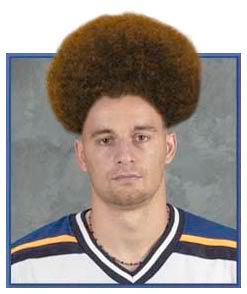
Sunday, January 21, 2007
Slegr's Soup
By Greg
There's a bunch of random hockey-related crap scattered around my house, and among the items most likely to make girls think twice about spending time with me are a few hockey-themed cookbooks. They're always useful -- there's no better way to convince people you're part of high society than by cooking them something out of "Cordon Blue Jackets," for instance.
The other day, Jes -- who routinely holds posh dinner parties -- asked me for a Jiri Slegr-themed recipe (seriously). He asked the right man -- I'm the proud owner of a copy of the 1998 publication, "Goal Scorers & Gourmets: theKansas City Pittsburgh Penguins Cookbook." It's a marvelous item -- hundreds of years from now, they'll be learning much about the late 20th century from the photos of Dave Hannan and Joe Mullen wearing aprons.
The team at the time was pretty Czech-heavy, with Slegr, Jaromir Jagr, Jan Hrdina, Robert Lang, and Martin Straka, not to mention Peter Skudra, who I always forget isn't Czech. (Among non-Czechs, Aleksey Morozov contributes a recipe for pelmeni, which I'll have to try at some point).
Slegr's recipe (ok, it's marked as "Jiri & Katerina Slegr," and I have a feeling Jiri's only contribution was in the eating) is for Garlic Soup, which sounded perfect today in a number of ways -- I've got a cold, garlic is the perfect food, and I've dealt with hockey players' recipes in the past. With the weather ugly, I stayed in this morning and made:
Ingredients:
4-5 garlic cloves, chopped
2 potatoes, skinned and chopped
1 or 2 cubes vegetable bouillon
1 tsp marjoram
1 tsp butter
Bacon (the Slegrs leave this up to the cook's discretion; I used three slices and was happy with the result)
Salt and pepper to taste
1 Jiri Slegr hockey card
 * Place the Slegr hockey card in a place of honor in the kitchen. Feel the positive energy.
* Fry up the bacon in the same manner the Avalanche fried up the Red Wings last night. Crispy but not burnt is the goal. Chop that bacon.
* Actually, while you're at it, you've chopped the potatoes ahead of time, right?
* Pour two quarts water into pot. Perhaps I erred in not including "water" and "pot" in the ingredients. If you don't have a pot, go out and buy one, quick.
* I usually like to have a nice vodka and limeade or three while I'm cooking. Today I didn't -- I was cooking at 11 a.m. and I have some standards, however low and rarely-applied they may be. Nonetheless, about now is a good time to fix one.
* Add potatoes, garlic, butter, marjoram, bacon, salt, and pepper to the pot. Turn on burner. Watch pot, despite tales advising against such behavior.
 * When mixture begins boiling, add bouillon. Realize you've been spelling "bouillon" wrong all these years.
* Let cook for, oh, about 20 minutes, stirring when you feel like it. Take this time to reflect on Slegr's many accomplishments. Listing his various teams alone takes up 20 minutes.
* Check the potatoes with a fork. They should be soft.
* Eat.
It turned out pretty well -- it'll be a good dish when I someday host the "Czech defensemen who played for the Thrashers then went on to greater success elsewhere"-themed dinner. A Czech beer would probably taste great with it, but remember, we're applying standards this morning.
Fun hockey-cooking-related fact of the day: Patrik Stefan's contribution to the Atlanta Thrashers' "Cooking With the Birds" cookbook was "Creamed Brains Soup."
Disclaimer: this recipe was created by Jiri Slegr, not Greg, so if you get sick or die from it, you should not sue Greg. Thanks.
There's a bunch of random hockey-related crap scattered around my house, and among the items most likely to make girls think twice about spending time with me are a few hockey-themed cookbooks. They're always useful -- there's no better way to convince people you're part of high society than by cooking them something out of "Cordon Blue Jackets," for instance.
The other day, Jes -- who routinely holds posh dinner parties -- asked me for a Jiri Slegr-themed recipe (seriously). He asked the right man -- I'm the proud owner of a copy of the 1998 publication, "Goal Scorers & Gourmets: the
The team at the time was pretty Czech-heavy, with Slegr, Jaromir Jagr, Jan Hrdina, Robert Lang, and Martin Straka, not to mention Peter Skudra, who I always forget isn't Czech. (Among non-Czechs, Aleksey Morozov contributes a recipe for pelmeni, which I'll have to try at some point).
Slegr's recipe (ok, it's marked as "Jiri & Katerina Slegr," and I have a feeling Jiri's only contribution was in the eating) is for Garlic Soup, which sounded perfect today in a number of ways -- I've got a cold, garlic is the perfect food, and I've dealt with hockey players' recipes in the past. With the weather ugly, I stayed in this morning and made:
Slegr's Garlic Soup
Ingredients:
4-5 garlic cloves, chopped
2 potatoes, skinned and chopped
1 or 2 cubes vegetable bouillon
1 tsp marjoram
1 tsp butter
Bacon (the Slegrs leave this up to the cook's discretion; I used three slices and was happy with the result)
Salt and pepper to taste
1 Jiri Slegr hockey card
* Place the Slegr hockey card in a place of honor in the kitchen. Feel the positive energy.* Fry up the bacon in the same manner the Avalanche fried up the Red Wings last night. Crispy but not burnt is the goal. Chop that bacon.
* Actually, while you're at it, you've chopped the potatoes ahead of time, right?
* Pour two quarts water into pot. Perhaps I erred in not including "water" and "pot" in the ingredients. If you don't have a pot, go out and buy one, quick.
* I usually like to have a nice vodka and limeade or three while I'm cooking. Today I didn't -- I was cooking at 11 a.m. and I have some standards, however low and rarely-applied they may be. Nonetheless, about now is a good time to fix one.
* Add potatoes, garlic, butter, marjoram, bacon, salt, and pepper to the pot. Turn on burner. Watch pot, despite tales advising against such behavior.
* When mixture begins boiling, add bouillon. Realize you've been spelling "bouillon" wrong all these years.* Let cook for, oh, about 20 minutes, stirring when you feel like it. Take this time to reflect on Slegr's many accomplishments. Listing his various teams alone takes up 20 minutes.
* Check the potatoes with a fork. They should be soft.
* Eat.
It turned out pretty well -- it'll be a good dish when I someday host the "Czech defensemen who played for the Thrashers then went on to greater success elsewhere"-themed dinner. A Czech beer would probably taste great with it, but remember, we're applying standards this morning.
Fun hockey-cooking-related fact of the day: Patrik Stefan's contribution to the Atlanta Thrashers' "Cooking With the Birds" cookbook was "Creamed Brains Soup."
Disclaimer: this recipe was created by Jiri Slegr, not Greg, so if you get sick or die from it, you should not sue Greg. Thanks.


Monday, July 31, 2006
Jiri Slegr: A Tribute
A few days ago, I was thinking about Jiri Slegr and why the Canucks had decided to sign Yannick Tremblay rather than the Hockey Adonis. I also had the sinking premonition that Slegr was going to retire, rather than come back for another NHL season.
My Jedi senses have once again led me in the right direction as Jiri Slegr has signed a deal with his hometown HC Chemopetrol Litvinov club and has pretty much closed the book on his illustrious NHL career.
Regular Season: 622GP 56-193-249 838PIM
Playoffs: 42GP 4-14-18 39PIM
With that, it's time for a tribute to one of my all-time favourite players.
---
Slegr was born Jiri Bubla, May 30th, 1971, in the Czech town of Jihlava, where his dad was playing hockey with the once-legendary Dukla squad. Jiri was named after his father, the ex-Canucks defenseman, who soon left to North America and left his family behind. Jiri and his father rarely had contact during his childhood, and his mother remarried, moving the family to Litvinov, a town known for having a chemical plant and a good hockey team.
As he was estranged from his father and found himself growing up with a new family, Jiri ditched the Bubla name and took the name of his mother's family, Šlégr (SHLAY-gur)
Slegr is very much similar to his father in many ways. Both are shorter, offensive-minded defensemen who were very muscular and ended up playing with the Vancouver Canucks. For all of their muscle, both Jiri's had trouble handling bigger forwards. It seems the muscles were great for getting the ladies, but not clearing the crease.
Slegr grew up behind the Iron Curtain, trained in a very strong Litvinov system that also produced his 'mates' Martin Rucinsky, Robert Reichel, Robert Lang, and Josef Beranek.
Slegr's breaking out party came at the 1990 World Junior Championships, where the very strong Czechs pulled out a Bronze medal. This team featured many of the Czechs stars, such as Jaromir Jagr, that comprised the new golden years of Czech hockey. Slegr had 3 goals and 4 assists in 7 games for the Czechs.
Slegr played his first full season in the senior Czechoslovakian Extraleague as a 19 year old in 1990-91 with Litvinov, and put up an amazing 43 points in 39 games. For his efforts, Slegr won the Best Defensemen Award, an amazing feat for a 19-year old. He was also named Best Defenseman at the 1991 WJC, where he put up 9 assists and a +9 in 7 games, and earned another Bronze medal.
Slegr, like many of his Czech-mates, found himself suddenly open to playing in the NHL as the Iron Curtain fell. Slegr was taken 2nd round, 23rd overall, by the Vancouver Canucks in the 1990 Entry Draft (one of the strongest drafts of all time, if not the strongest) after his fine performance at the 1990 WJC. He was the third Czech picked that day behind Petr Nedved (who had already defected earlier) and Jaromir Jagr.
Slegr made his North American debut in 1992 with the Hamilton Bulldogs, putting up 18 points in 21 games before getting the call up to the Canucks, where he put up 26 points in 41 games.
When I saw Slegr play for the first time, I was an instant fan. I was a big fan of offensive defensemen and loved the way Slegr skated and dished the puck. It also helped that in one of the early EA NHL games for the Genesis (I forget which one in particular), he'd always lead my Canucks in scoring as I scored on countless end-to-end rushes.
Slegr would play one more full season for the Canucks before being traded to the Edmonton Oilers for Roman Oksiuta during the strike-shortened 1994-95 season. In his season-and-a-half in Edmonton, Slegr clearly never fit in very well and had only 23 points in 69 games. Both parties were clearly frustrated with each other, and Slegr went to play with Sodertalje in Sweden in 96-97.
Slegr made his triumphant return to the NHL the following year with the Czech-heavy Pittsburgh Penguins. In 4 seasons with the Pens, Slegr was converted to a much more defensive-minded role and learned to round out his game. This transformation led to his peak, when in 1998, Slegr's fantastic play helped lead the Czechs to the Gold Medal in the Nagano Olympic Games. His coach at the time, Ivan Hlinka, was quoted as saying that the tournament represented the best he'd ever seen Slegr play.
Fast forward to 2001, when he was traded to the Atlanta Thrashers for another down chapter in his career. Slegr was expected to carry a much heavier load and carry the play of such esteemed defence-mates such as Yannick Tremblay and Chris Tamer. Slegr seemed to be unable to handle the pressure at times, and faltered in such a role.
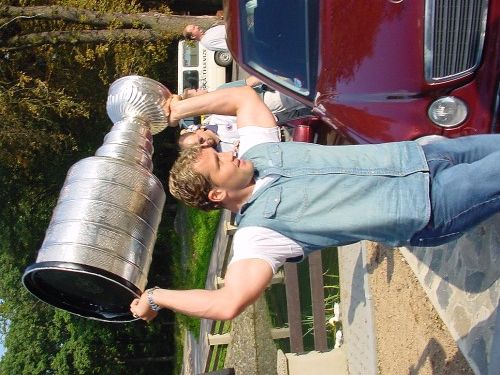
After parts of two seasons, Slegr was given a reprieve and traded to the Detroit Red Wings in 2002. Slegr was merely a 'black ace' on the squad, but still managed to get his named etched on the Stanley Cup as his one and only playoff appearance for the Wings was in the Stanley Cup playoffs. He took the Cup home to Litvinov that offseason and held one huge block party.
Unable to find a team willing to sign him, Slegr played the next season between Litvinov and Omsk. It was a frustrating time for Slegr, as Omsk already had their quota of imports and Slegr was basically in the press box for most games. He was paid about a $1mil US to basically watch hockey in cold Russian rinks. Not a bad gig, but clearly not too fulfilling.
In 2003-04, Slegr made his return to Vancouver to be closer to his father. The two Jiri's had re-established their relationship and there was a nice happy ending to that part of the story. Unfortunately, Canucks coach Marc Crawford, for some odd reason, never liked Slegr and played him sparingly.
Slegr requested, and was granted by a willing and understanding Brian Burke, a trade. Slegr ended up in Boston where he finished out his NHL career on a high note, with a season in Litvinov during the lockout sandwiched in between.
GOLD MEDAL CLUB: Jiri Slegr retires as one of the few players to have earned a Stanley Cup ring, an Olympic Gold Medal, and a World Championships Gold. Jiri is one of only 18 players to have ever done this.
#71: Slegr wore #71 in honour of the year of his birth.
Full Stats via Eurohockey.net
An article on Jiri Bubla and Jiri Slegr, posted by VCOE
Memories…
First, here is one of my all-time favourite goals… Jiri scores to put the Czechs up 1-0 during the Semi-Finals of the Olympic Games in Nagano. Of course, the over-the-top play-by-play adds to the awesomeness.
And here is Slegr setting up teammate Viktor Hubl during the lockout. This is a typical Slegr join-the-rush point. Just a beautiful tic-tac-toe play.
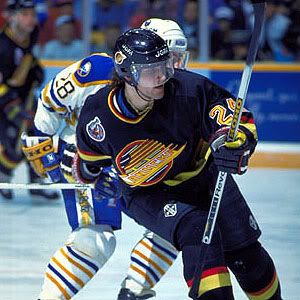
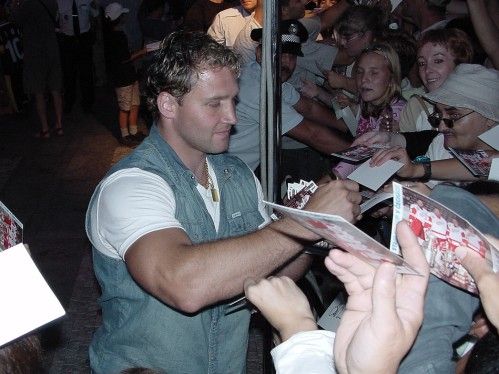
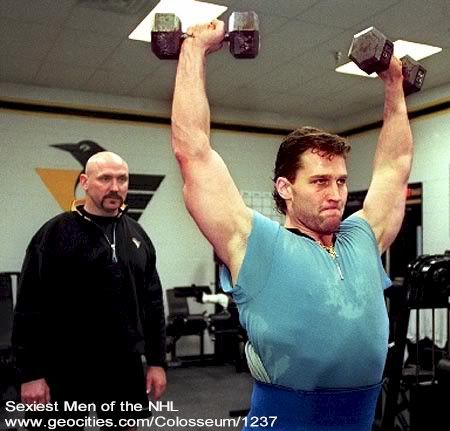
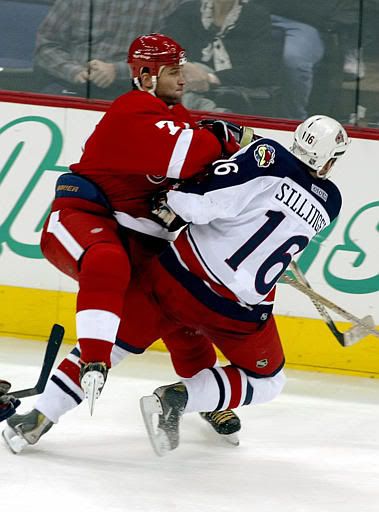


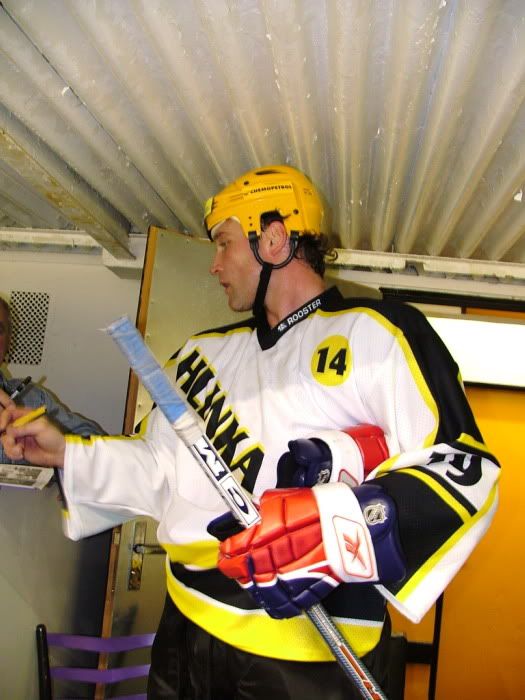

Jiri Slegr and Jiri Bubla appearing at a charity event together.
My Jedi senses have once again led me in the right direction as Jiri Slegr has signed a deal with his hometown HC Chemopetrol Litvinov club and has pretty much closed the book on his illustrious NHL career.
Regular Season: 622GP 56-193-249 838PIM
Playoffs: 42GP 4-14-18 39PIM
With that, it's time for a tribute to one of my all-time favourite players.
---
Slegr was born Jiri Bubla, May 30th, 1971, in the Czech town of Jihlava, where his dad was playing hockey with the once-legendary Dukla squad. Jiri was named after his father, the ex-Canucks defenseman, who soon left to North America and left his family behind. Jiri and his father rarely had contact during his childhood, and his mother remarried, moving the family to Litvinov, a town known for having a chemical plant and a good hockey team.
As he was estranged from his father and found himself growing up with a new family, Jiri ditched the Bubla name and took the name of his mother's family, Šlégr (SHLAY-gur)
Slegr is very much similar to his father in many ways. Both are shorter, offensive-minded defensemen who were very muscular and ended up playing with the Vancouver Canucks. For all of their muscle, both Jiri's had trouble handling bigger forwards. It seems the muscles were great for getting the ladies, but not clearing the crease.
Slegr grew up behind the Iron Curtain, trained in a very strong Litvinov system that also produced his 'mates' Martin Rucinsky, Robert Reichel, Robert Lang, and Josef Beranek.
Slegr's breaking out party came at the 1990 World Junior Championships, where the very strong Czechs pulled out a Bronze medal. This team featured many of the Czechs stars, such as Jaromir Jagr, that comprised the new golden years of Czech hockey. Slegr had 3 goals and 4 assists in 7 games for the Czechs.
Slegr played his first full season in the senior Czechoslovakian Extraleague as a 19 year old in 1990-91 with Litvinov, and put up an amazing 43 points in 39 games. For his efforts, Slegr won the Best Defensemen Award, an amazing feat for a 19-year old. He was also named Best Defenseman at the 1991 WJC, where he put up 9 assists and a +9 in 7 games, and earned another Bronze medal.
Slegr, like many of his Czech-mates, found himself suddenly open to playing in the NHL as the Iron Curtain fell. Slegr was taken 2nd round, 23rd overall, by the Vancouver Canucks in the 1990 Entry Draft (one of the strongest drafts of all time, if not the strongest) after his fine performance at the 1990 WJC. He was the third Czech picked that day behind Petr Nedved (who had already defected earlier) and Jaromir Jagr.
Slegr made his North American debut in 1992 with the Hamilton Bulldogs, putting up 18 points in 21 games before getting the call up to the Canucks, where he put up 26 points in 41 games.
When I saw Slegr play for the first time, I was an instant fan. I was a big fan of offensive defensemen and loved the way Slegr skated and dished the puck. It also helped that in one of the early EA NHL games for the Genesis (I forget which one in particular), he'd always lead my Canucks in scoring as I scored on countless end-to-end rushes.
Slegr would play one more full season for the Canucks before being traded to the Edmonton Oilers for Roman Oksiuta during the strike-shortened 1994-95 season. In his season-and-a-half in Edmonton, Slegr clearly never fit in very well and had only 23 points in 69 games. Both parties were clearly frustrated with each other, and Slegr went to play with Sodertalje in Sweden in 96-97.
Slegr made his triumphant return to the NHL the following year with the Czech-heavy Pittsburgh Penguins. In 4 seasons with the Pens, Slegr was converted to a much more defensive-minded role and learned to round out his game. This transformation led to his peak, when in 1998, Slegr's fantastic play helped lead the Czechs to the Gold Medal in the Nagano Olympic Games. His coach at the time, Ivan Hlinka, was quoted as saying that the tournament represented the best he'd ever seen Slegr play.
Fast forward to 2001, when he was traded to the Atlanta Thrashers for another down chapter in his career. Slegr was expected to carry a much heavier load and carry the play of such esteemed defence-mates such as Yannick Tremblay and Chris Tamer. Slegr seemed to be unable to handle the pressure at times, and faltered in such a role.
After parts of two seasons, Slegr was given a reprieve and traded to the Detroit Red Wings in 2002. Slegr was merely a 'black ace' on the squad, but still managed to get his named etched on the Stanley Cup as his one and only playoff appearance for the Wings was in the Stanley Cup playoffs. He took the Cup home to Litvinov that offseason and held one huge block party.
Unable to find a team willing to sign him, Slegr played the next season between Litvinov and Omsk. It was a frustrating time for Slegr, as Omsk already had their quota of imports and Slegr was basically in the press box for most games. He was paid about a $1mil US to basically watch hockey in cold Russian rinks. Not a bad gig, but clearly not too fulfilling.
In 2003-04, Slegr made his return to Vancouver to be closer to his father. The two Jiri's had re-established their relationship and there was a nice happy ending to that part of the story. Unfortunately, Canucks coach Marc Crawford, for some odd reason, never liked Slegr and played him sparingly.
Slegr requested, and was granted by a willing and understanding Brian Burke, a trade. Slegr ended up in Boston where he finished out his NHL career on a high note, with a season in Litvinov during the lockout sandwiched in between.
GOLD MEDAL CLUB: Jiri Slegr retires as one of the few players to have earned a Stanley Cup ring, an Olympic Gold Medal, and a World Championships Gold. Jiri is one of only 18 players to have ever done this.
#71: Slegr wore #71 in honour of the year of his birth.
Full Stats via Eurohockey.net
An article on Jiri Bubla and Jiri Slegr, posted by VCOE
Memories…
First, here is one of my all-time favourite goals… Jiri scores to put the Czechs up 1-0 during the Semi-Finals of the Olympic Games in Nagano. Of course, the over-the-top play-by-play adds to the awesomeness.
And here is Slegr setting up teammate Viktor Hubl during the lockout. This is a typical Slegr join-the-rush point. Just a beautiful tic-tac-toe play.
Jiri Slegr and Jiri Bubla appearing at a charity event together.
Labels: Hockey Hotties, Retirement, Slegr, Tribute